Wondering whether “more land” in Waxhaw really means the lifestyle you picture? If you are searching for a bigger yard, more privacy, or a property with room for a pool, barn, or garden, the details matter more than the listing headline. This guide will help you understand how backyard and acreage living works in Waxhaw so you can ask smarter questions and move forward with confidence. Let’s dive in.
Why Waxhaw appeals to space-minded buyers
Waxhaw stands out because it offers a mix that many move-up buyers want: small-town character with access to the Charlotte area. The town describes itself as about 20 minutes from south Charlotte and roughly three miles from the South Carolina line.
That mix can make Waxhaw feel like a good middle ground if you want more elbow room without feeling completely disconnected. Its historic downtown and Main Street identity also add to the appeal for buyers who want land without giving up a recognizable town center.
Waxhaw is also planning with open space in mind. In 2024, the town added Conservation Design Development rules that require 50% of land in new developments to remain undisturbed, while keeping density tied to existing zoning.
Waxhaw address versus town limits
One of the most important things to understand is that a Waxhaw mailing address does not always mean the property is inside Waxhaw town limits. That difference can affect zoning, permits, and which rules or services apply to the property.
Before you assume anything about what you can build or how a property is serviced, verify the jurisdiction. This is especially important if you are shopping for larger lots, outbuildings, or a more rural setup.
What “acreage” means in Waxhaw
In Waxhaw, “space” can mean a few different things. One home may sit in a neighborhood with a generous backyard and public utilities, while another may offer a more rural-style setting with different maintenance needs and land-use limits.
The town’s zoning code shows how lot size and development intensity can vary. In simple terms, some residential districts are designed for larger-lot living, while others are built for more compact neighborhoods.
R-1 zoning and larger lots
R-1 is the closest match to true acreage living within Waxhaw’s residential zoning. It allows single-family detached homes at 1 unit per acre, with a minimum lot width of 100 feet and minimum depth of 200 feet.
The code says R-1 is intended to support rural character and traditional suburban housing with public water and sewer access. If you want the feel of more land while staying in a residential framework, this is the zoning category most buyers want to understand first.
R-2 and R-3 lot patterns
R-2 allows 2 units per acre, with a 90-foot minimum lot width and 160-foot minimum depth. R-3 allows 3 units per acre, with an 80-foot minimum width and 140-foot minimum depth.
These areas can still offer meaningful outdoor space, but they are generally not the same as true acreage living. In R-3, clustering may be used to preserve trees and open space, so a neighborhood may feel greener or more open even if individual lots are smaller.
R-4 and compact development
R-4 is the most compact residential district. It allows 4 units per acre and, in some cluster forms, up to 5 units per acre.
This district is intended for infill near downtown and can include single-family attached, duplex, and cottage-home styles. If your priority is a large backyard or hobby-space setup, this type of zoning may not match your goals.
Why some neighborhoods still feel spacious
Lot size is only one part of the story. Major subdivisions in Waxhaw require buffer yards, and the town’s conservation rules support new communities that preserve wooded areas and open land.
That means a property may feel private or scenic without being a true acreage parcel. If your goal is visual openness, tree cover, or breathing room, some conservation-oriented neighborhoods may give you that experience without the upkeep of a much larger lot.
What you may be able to add
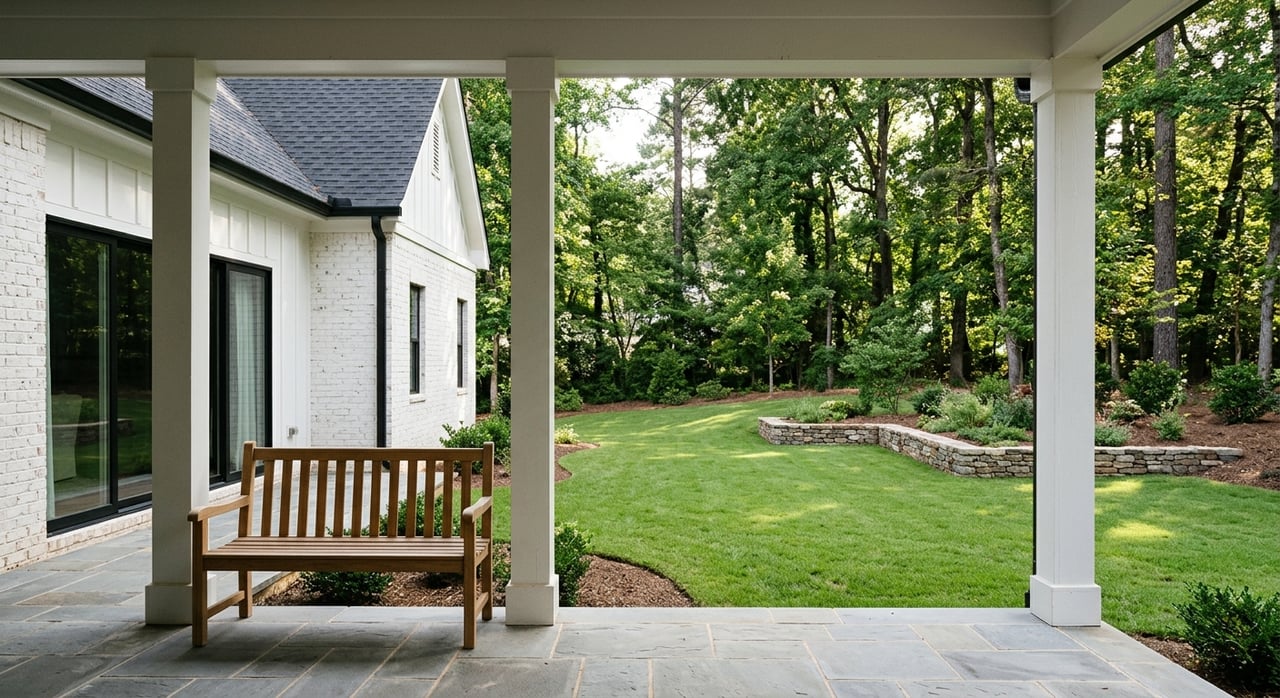
For many buyers, backyard living is really about flexibility. Waxhaw’s code allows a range of accessory structures in residential districts, including garages, pools, porches, sheds, and horse barns.
That is a big reason some properties can feel like mini-farms or hobby-farm homes even when they are still legally residential. Still, the exact answer depends on the property’s zoning, any overlay rules, and private covenants that may apply.
If you are dreaming about a detached garage, a pool, a workshop, or barn-style storage, make that part of your research early. A beautiful lot is only valuable if it supports how you want to use it.
The real tradeoffs of more land
Acreage can give you privacy, room for outdoor living, and more freedom in how your property functions day to day. It can also come with a longer maintenance list than many buyers expect.
More land usually means more mowing, more drainage to monitor, and more surfaces to maintain. It also means you need to understand where public responsibility ends and private responsibility begins.
Waxhaw’s stormwater information says the town handles stormwater within the public right-of-way and for certain new developments. Maintenance beyond the right-of-way is the responsibility of the property owner or HOA.
Utilities matter more on larger lots
One of the biggest questions with backyard and acreage living is whether the property uses public water and sewer or relies on a private well and septic system. That answer affects both cost and long-term maintenance.
In rural and outlying suburban areas, NC State Extension notes that most homes rely on septic systems when public sewer is not available. Before buying land or a larger-lot home, it recommends investigating soils, septic feasibility, improvement permits, operating requirements, and maintenance costs.
Septic basics to understand
A septic system needs enough space for the home, the drainfield, and a future repair area. NC State Extension says one acre with suitable soils and topography is usually the minimum sufficient area.
This is a key reason why two lots with the same advertised size may not offer the same real-world flexibility. The shape of the land, the soils, and the system layout all affect what the property can support.
Well placement matters too
If a property uses a private well, placement is important. NC State Extension says wells should be protected from flooding and surface-water contamination and placed at least 100 feet from a septic system or drainfield.
For buyers, this means a larger lot is not automatically a simple blank canvas. Infrastructure placement can shape where future additions, outdoor features, or improvements make sense.
Drainage, digging, and site work
The bigger the lot, the more important site conditions become. Drainage and floodplain questions should be part of your review, especially if the property includes low areas, wooded sections, or open land you hope to improve.
Waxhaw provides floodplain and stormwater resources, and the town notes that it reviews floodplain issues and drainage requirements for new development. Even if a yard looks usable at first glance, the practical details matter.
If you plan to install fencing, add landscaping, build an outbuilding, or start any digging project, North Carolina’s 811 guidance says you must contact 811 before work begins. Waxhaw also says single-family residential development over one acre requires erosion and sediment control plan approval.
Smart questions to ask before you buy
If you are comparing backyard homes and acreage properties in Waxhaw, a few questions can save you time and help you avoid surprises.
- Is the property actually inside Waxhaw town limits, or does it only have a Waxhaw mailing address?
- What is the current zoning, and what does that zoning allow?
- Is the home on public water and sewer, or on private well and septic?
- Is there enough usable area for the features you want, such as a pool, shed, barn, or garden?
- Who is responsible for stormwater maintenance beyond the public right-of-way?
- Are there floodplain, drainage, or erosion-control issues that could affect future plans?
- Are there private covenants that may limit accessory structures or outdoor uses?
How to match the property to your lifestyle
The right choice usually comes down to how you want to live. If you want a larger backyard with less upkeep, a neighborhood with preserved open space may be a better fit than true acreage.
If you want room for outbuildings, privacy, and more control over your outdoor setup, a larger-lot property may be worth the added maintenance. The key is to weigh the lifestyle benefits against utilities, zoning, drainage, and ongoing care.
In Waxhaw, the best property is rarely just the one with the most land. It is the one where the land, services, and rules all line up with your goals.
If you are weighing backyard space versus true acreage in Waxhaw, working with a local advisor can make the search much clearer. Kris Kjeldsen can help you evaluate lot use, property fit, and the bigger picture so you can buy with confidence.
FAQs
What does acreage living in Waxhaw usually mean for buyers?
- In Waxhaw, acreage living can mean anything from a one-acre residential lot to a more rural-style property, so you need to confirm zoning, utilities, and how the land can actually be used.
What is the difference between a Waxhaw mailing address and Waxhaw town limits?
- A Waxhaw mailing address does not always mean the property is inside town limits, and that can affect zoning, permits, and which local services or rules apply.
What zoning in Waxhaw is closest to true acreage living?
- R-1 is the closest match inside Waxhaw’s residential zoning because it allows single-family detached homes at 1 unit per acre with larger minimum lot dimensions.
What should you check about wells and septic on larger Waxhaw properties?
- You should check septic feasibility, soils, permits, maintenance needs, and well placement, because these factors affect what the lot can support and how the property functions long term.
Can you add a barn, shed, or pool to a residential property in Waxhaw?
- Waxhaw’s residential code allows several accessory structures, including garages, pools, porches, sheds, and horse barns, but the exact answer depends on zoning, overlays, and private covenants.
Why can some Waxhaw neighborhoods feel spacious without being acreage communities?
- Buffer yards, tree preservation, and conservation rules can make neighborhoods feel wooded and open even when the individual lots are not true acreage parcels.